石英晶體微天平
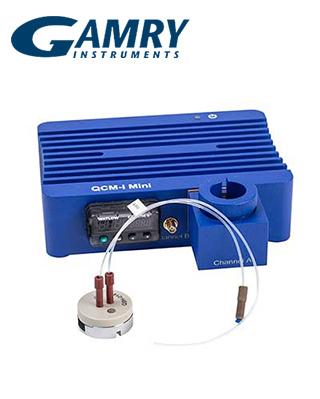
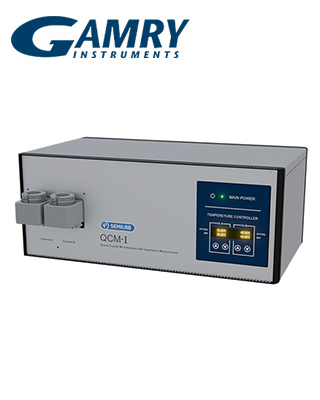
產品型號:QCM-ITM具阻抗量測與耗散分析功能的石英晶體微天平 (QCM-D)
QCM-I™ 石英晶體微天平 (Quartz Crystal Microbalance, QCM) 可量測石英晶體共振器及其吸附薄膜的共振頻率與耗散變化。QCM 為高靈敏度質量感測器,可廣泛應用於各種研究,包括生物感測器、化學感測器、腐蝕研究、高分子薄膜、奈米粒子薄膜、蛋白質薄膜、生物膜等。藉由量測共振頻率與耗散的變化,可獲得薄膜質量、黏度及彈性等特性的相關資訊。
QCM-I 特色
l 同時量測共振頻率及共振品質(半高全寬、頻寬、耗散)
l 可快速且依序量測不同泛音,5 MHz 石英晶體最高可量測至第 13 泛音。
l 內建溫度控制功能,控制範圍 4°C ~ 80°C ±0.02°C。
l 可選配電化學量測模組,搭配 ITO-QCM 感測器使用。
l 模組化感測器夾具,最多可支援 4 個量測通道。
l 透過 USB 與安裝 Windows® 10/11 的外部電腦連接及控制。
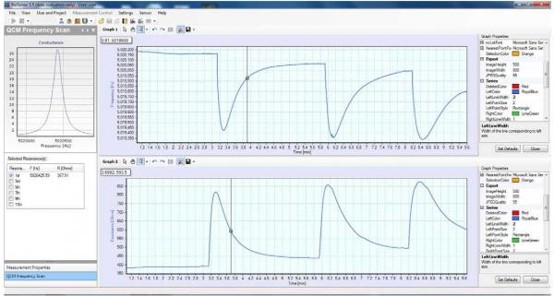
隨附軟體可完整控制QCM-I系統,並提供兩種量測模式:
1.Resonance(共振模式)︰量測共振曲線,並計算共振頻率及半高全寬,最高量測頻率可達 80 MHz。
2.QCM-t(連續量測模式)︰持續量測共振參數及流通池溫度。
計算功能︰系統可利用標準模型或自訂模型計算多種 QCM 及吸附層相關參數。所有計算結果皆可即時顯示於螢幕、列印、儲存及匯出供後續分析。
標準配備
l QCM 主機(兩組溫控通道)
l Intel NUC 電腦 (Windows® 10 Pro)
l 流通式 QCM 感測器夾具 ×2
l BioSense 3.xx 軟體(單一使用者授權)
l 半自動樣品注入系統(含半自動注射閥)
技術資訊
|
量測原理 |
QCM-I 為高靈敏度質量感測器,可量測石英晶體共振器頻率的變化。作為一種無標記生物感測器,QCM-I 可量測發生於感測器表面或近表面的吸附層濕質量。本系統採用石英晶體阻抗分析原理,可量測共振頻率 (fres)及共振導納曲線頻寬。其中頻寬,或半高全寬 (FWHM) 與品質因數 (Q) 具有直接關係。品質因數(Q)依定義即為耗散 (D) 的倒數。 |
|
量測通道數量 |
1 ~ 4 |
|
頻率範圍 |
1 ~ 80 MHz,5 MHz 石英晶體最高支援至第 13 泛音。 |
|
工作溫度 |
4°C ~ 80°C,可透過手動或軟體控制。穩定度 ±0.02°C |
|
樣品導入 |
樣品可透過手動或 BioSense 軟體控制,利用外接注射器或外接蠕動泵浦 方式導入。並支援Rheodyne Model 9725 手動注射閥及Rheodyne MX 系列半自動切換閥。 另可選配外部自動進樣器。 |
|
流通池容量 |
~ 40 µl(搭配 Ø14 mm 石英晶體時之典型值) |
|
典型流速 |
0.01 µl/min ~ 35 ml/min(搭配外部注射泵浦,注射器容量 1~60 mL) |
|
樣品體積 |
1 ~ 2000 µl(取決於安裝之迴路容量) |
|
接液零件 |
PTFE, PEEK, SS, VITON 或 Kalrez |
量測靈敏度
|
標準共振頻率靈敏度 |
~ 2 x 10⁻¹ Hz |
|
液體中耗散靈敏度 |
~ 1 x 10⁻⁷ |
|
液體中質量靈敏度 |
≤ 1 ng/cm2 |
感測器
|
感測器晶體 |
5 MHz, AT-cut 石英晶體、模組化感測器夾具可支援Ø14 mm 或1吋石英晶體 詳細規格請參閱 QCM 感測器資料表。 |
軟體
|
BioSense |
適用於OWLS, QCM, EC量測的通用軟體平台 詳細內容請參閱 BioSense 資料表。 |
|
量測資料匯入 / 匯出 |
可於不同 BioSense 軟體之間交換資料,亦可匯出至第三方軟體,包括Excel, JPG, BPM, WMF等 |
|
電腦需求 |
USB 2.0,搭配 MS Windows® 7 / 8 / 10 |
電源
|
電源供應 |
直流電源供應器,支援全球通用交流電輸入AC 100 ~ 240 V, 50 ~ 60 Hz |
Product Details
Quartz Crystal Microbalance with Dissipation
The measuring principle is based on impedance analysis of the quartz crystal. The resonant frequency and the bandwidth of the resonant conductance curve are determined. The bandwidth or full width at half maximum, (FWHM) is a direct correlation with the quality factor (Q) which is by definition the inverse of dissipation (D).
QCM-I Features:
l Both the frequency and the quality of resonance (FWHM or bandwidth or dissipation) are measured
l Different harmonics (up to the 13th overtone at 5MHz crystals) can be quickly and sequentially measured
l Temperature control from 4°C to 80°C (± 0.02 °C) is included
l EC measurement module is optionally available with ITO-QCM sensors
l Modular sensor holder up to 4 measuring channels
l External PC with Windows® 10/11; communication with QCM-I via USB
The software performs full control of the QCM-I Instrument. Two measurement modes are available:
1.Resonance: Measurement of resonance curve and calculation of the resonance frequency & FWHM up to 80 MHz
2.QCM-t: Continuous measurement of the resonance parameters and the temperature of the flow-cell.
Calculation: Various QCM and ad-layer parameters can be calculated using standard or custom made models. All these parameters can be displayed on the screen, printed, saved or can be exported for further evaluation.
What's Included:
l QCM Unit with two temperature controlled channels
l PC Computer INTEL NUC with Windows® 10 Pro
l QCM Sensor Holder (flow through type) 2 pc
l BioSense 3.xx Software (one user license)
l Sample Injection System with Semi-automatic injection valve
TECHNICAL INFORMATION
|
Measuring Principle |
The QCM-I unit is a high sensitivity mass sensor which measures the change in frequency of a quartz crystal resonator and as a label free biosensor it measures the “wet mass” of the adsorbed layer in processes occurring at or near the sensor surface. The measuring principle is based on impedance analysis of the quartz crystal. The resonant frequency (fres) and the bandwidth of the resonant conductance curve are determined. The bandwidth or full width at half maximum (FWHM) is in direct correlation with the quality factor (Q) which is by definition the inverse of the well known dissipation (D). |
|
Measurement Channels |
1 ~ 4 |
|
Frequency Range |
1 ~ 80 MHz, up to the 13th overtone for a 5 MHz Crystal |
|
Working Temperature |
4°C to 80°C, controlled manually or via software, stability ± 0.02°C |
|
Sample Loading |
Sample injection with external syringe or peristaltic pump unit controlled manually or by BioSense software, and Rheodyne Model 9725 manual injector valve, or Rheodyne MX series semiautomatic switching valve. Optional external Auto sampler unit is available |
|
Flow Cell Volume |
~ 40 µl (typical with Ø14 mm crystals) |
|
Typical Flow Rates |
0.01µl/min ~ 35ml/min with external syringe pump, Syringe size 1 ~ 60 ml |
|
Sample Volume |
1 to 2000 µl (depends on installed loop volume) |
|
Wetted parts |
PTFE, PEEK, SS, VITON or Kalrez |
MEASUREMENT SENSITIVITY
|
Standard Resonance Frequency sensitivity |
~ 2 x 10⁻¹ Hz |
|
Standard Dissipation Sensitivity in Liquid |
~ 1 x 10⁻⁷ |
|
Mass Sensitivity in Liquid |
≤ 1 ng/cm2 |
SENSORS
|
Sensor Crystal |
5 MHz, AT-cut, modular sensor holder accommodates either 14 mm or 1” inch diameter crystals See more details in QCM sensor datasheets. |
SOFTWARE
|
BioSense |
Universal software platform for OWLS, QCM & EC measurements See more details in BioSense datasheet. |
|
Import/Export of the measured data |
Between separate BioSense software and export to third party software Excel, JPG, BPM, WMF etc. |
|
PC Requirement |
USB 2.0, works with MS Windows® 7 or 8 or 10 |
ELECTRICAL
|
Supply Voltage |
DC power supply with universal input voltage from 100V to 240V AC & 50 to 60 Hz. |